

Tiger Bitumen, the international bitumen brand of HY International Group, supplies Australian Standard bitumen to buyers around the world, including contractors, consultants, asphalt producers, and infrastructure developers sourcing binder for road projects in Turkey. We operate our own packing and export facilities at Karachi Free Zone, Pakistan, and Ajman Port, UAE, supplying Australian Standard bitumen as genuine physical merchandise rather than reselling cargo we don’t control.
This page explains what Australian Standard bitumen is, how the Class system works, the grades we supply, applications, packaging, export documentation, and how international buyers can request specifications or a quotation.
Australian Standard bitumen is a paving grade asphalt binder classified under AS 2008 (Residual Bitumen for Pavements), the Australian specification that defines conventional pavement-grade bitumen’s by viscosity at 60°C, measured in Pascal seconds. Rather than describing hardness with a single penetration reading, the AS 2008 classes are numbered by their nominal viscosity target Class 170, Class 320, Class 600 with a higher number indicating a stiffer, more viscous binder.
This grading approach is widely referenced outside Australia as well, because it gives specifiers a straightforward, viscosity-based way to match a binder to climate and traffic conditions: a lower class for cooler conditions and sprayed sealing work, a higher class for hot climates and heavy, sustained traffic loading.
Australian Standard bitumen is produced from petroleum residue through a controlled refining process, with production parameters adjusted to hit the target viscosity for each class rather than a penetration value. As with other viscosity based grading systems, achieving a consistent viscosity across a production batch requires close control over the refining and blending stages.
Each production batch is tested in the laboratory to confirm viscosity at 60°C, alongside penetration, softening point, ductility, and flash point, before it is approved for shipment. This confirms the batch genuinely meets its stated Class designation rather than simply falling close to it.
HY International has the capability to Export and Supply the Australian Standard Bitumen in compliance with National and International standards.
Each batch of penetration bitumen is tested against the core parameters that determine whether it meets its stated grade and will perform as expected once laid:
| Property Tested | What It Confirms |
| Viscosity at 60°C (Pa·s) | The defining parameter for the AS 2008 class confirms the binder falls within its target viscosity range |
| Penetration | Provides a supplementary hardness reading alongside the viscosity classification |
| Softening point | Indicates the temperature at which the begins to soften significantly |
| Ductility | Measures the binder's ability to stretch without breaking |
| Flash point | A safety parameter confirming safe handling and heating temperatures |
Results are recorded on a Certificate of Analysis issued with each shipment, so buyers and their engineers can verify the material against their project specification.
Australian Standard bitumen is engineered to deliver consistent, predictable performance across the class range. Depending on the grade selected, buyers can expect:
Selecting the correct class for a project’s climate and traffic profile rather than defaulting to whichever is easiest to source is what allows contractors to get the durability benefits the AS 2008 system is designed to deliver.
Australian Standard bitumen is used across a range of infrastructure applications, with the appropriate class depending on climate, traffic, and construction method:
Buyers sourcing Australian Standard bitumen for infrastructure work in Turkey typically require it where a project specification references AS 2008 directly, or where a road authority or contractor is familiar with the class system from prior projects and prefers to specify by class rather than penetration grade.
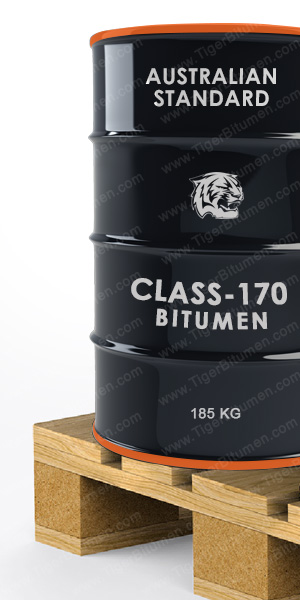
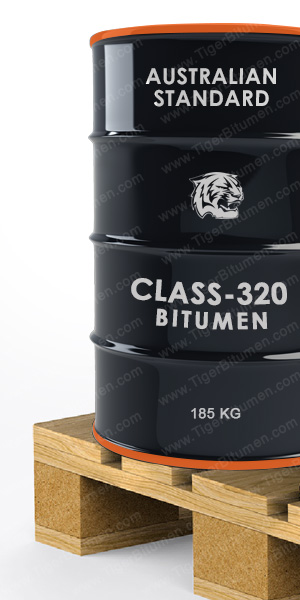
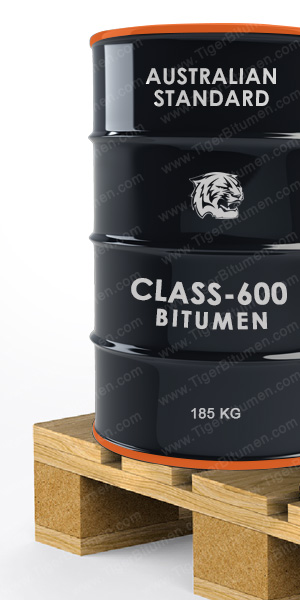
Tiger Bitumen currently supplies three confirmed Australian Standard grades:
Class 170 (C170)
Class 170 is the general-purpose grade in the range, most widely used in sprayed sealing and light asphalt applications where durability and fatigue resistance are priorities. It’s also commonly used as a base material for producing cutback bitumen, bitumen emulsions, and modified bitumen products.
Class 320 (C320)
Class 320 is a stiffer, higher-viscosity binder than Class 170, and is the grade most commonly used to manufacture standard hot mix asphalt. It suits a broader range of traffic and climate conditions than Class 170, without the extra stiffness of Class 600.
Class 600 (C600)
Class 600 is the stiffest grade in our range, used primarily for extra heavy-duty asphalt pavements that need to withstand substantial, sustained traffic loading. It’s the appropriate choice where a project specification calls for maximum resistance to deformation under heat and heavy vehicles.
If your project or import requirement calls for a different class, contact our export team directly with your specification — we’ll confirm honestly whether it’s something we currently produce rather than list a grade we can’t reliably deliver.
Australian Standard bitumen is packed in new steel drums and loaded into containers for direct vessel shipment, giving buyers a format that’s straightforward to receive, store, and distribute without requiring specialized bulk-liquid discharge infrastructure at the destination port.
Every production batch is tested before dispatch, and SGS inspection is available upon request. Buyers who want independent third-party verification before loading can request SGS inspection, appoint their own inspection agency, or arrange to have a representative attend loading in person.
Multigrade bitumen is a genuine, separate specification within Australian pavement bitumen distinct from the AS 2008 Class 170/320/600 system. It’s designed to combine penetration-grade flexibility at low temperatures with viscosity grade stiffness at high temperatures, and in Australia it’s generally treated as its own product category rather than a fourth C-class.
We want to be accurate here rather than assume: Multigrade bitumen is not currently listed among Tiger Bitumen’s confirmed Australian Standard product range. If your project specification calls for a multigrade binder, contact our export team to check current availability directly, rather than relying on this page to confirm it.
Tiger Bitumen supplies on FOB, CFR, or CIF terms, depending on the buyer’s preferred commercial arrangement and destination port. Our export facilities at Karachi Free Zone and Ajman Port are set up for direct container-vessel loading, giving international buyers including those coordinating supply for projects in Turkey a straightforward path from order confirmation to shipment.
Each export shipment is accompanied by a standard documentation package:
Buyers coordinating import procedures into Turkey, or any other destination, should confirm their own local documentation and customs requirements in advance, as these can vary by port and by the buyer’s import classification. Our export team can advise on what we’re able to provide to support that process.
Tiger Bitumen is committed to supplying Australian Standard bitumen backed by genuine production capability, tested documentation, and dependable export logistics. Specifically:
Class 170, Class 320, and Class 600 are our confirmed grades. If you need a different class or a multigrade binder, contact our export team directly to confirm current availability rather than assuming it's in stock.
They're distinguished by viscosity at 60°C, from softest to stiffest. Class 170 suits sprayed sealing and lighter applications, Class 320 is the standard grade for hot mix asphalt, and Class 600 is used for extra heavy-duty pavements under sustained heavy traffic.
No. Multigrade bitumen is a separate specification designed to combine low-temperature flexibility with high-temperature stiffness, and is generally treated as its own product category rather than a fourth AS 2008 class. It is not currently confirmed as part of our Australian Standard product range — contact us to check current status.
Yes. We supply international buyers, including those sourcing Australian Standard bitumen for road construction and infrastructure work in Turkey. Send us your required class, quantity, and destination details and our export team will respond directly.
SGS inspection is available upon request rather than automatic on every shipment. Buyers who want independent verification before loading should request it when placing their order, and are also welcome to appoint their own inspection agency.
New steel drums, loaded into containers for direct vessel shipment.
A Certificate of Analysis, Material Safety Data Sheet, commercial invoice, and packing list are provided as standard, with a Certificate of Origin and SGS inspection report available on request.
Yes. We quote against whichever commercial term suits the buyer's logistics arrangement and destination port.
Minimum order quantities vary by grade, packaging, and destination contact our export team with your specific requirement for an accurate figure.
Send us your required class (170, 320, or 600), quantity, packaging preference, and destination port, and our export team will respond with technical documentation and a firm quotation.
If you’re sourcing Australian Standard bitumen for a road or infrastructure project in Turkey or any other market tell us your required class, quantity, and destination port. Our export team will respond with technical specifications, documentation details, and a firm FOB, CFR, or CIF quotation.
Visit: www.TigerBitumen.com