Turkey Bitumen supplies Viscosity Grade bitumen to international buyers, including contractors, consultants, asphalt producers, and infrastructure developers. The range includes VG, AC, and AR viscosity grading systems for projects where the applicable specification requires viscosity-graded asphalt binder. This page explains Viscosity Grade bitumen, the differences between VG, AC, and AR grading systems, available grades, applications, packaging, quality documentation, and export options.
This page explains what Viscosity Grade bitumen is, how VG, AC, and AR grading actually differ, the complete range we supply, applications, packaging, export documentation, and how international buyers can request specifications or a quotation.
Viscosity Grade bitumen is a paving-grade asphalt binder classified by how it flows at specified temperatures, rather than by a single hardness reading like penetration grading. Viscosity is commonly measured at 60°C and, depending on the applicable standard, at 135°C to characterize binder behavior at temperatures relevant to pavement performance, mixing, and compaction. This provides a more direct indication of how the binder may behave during production, laying, and in-service conditions than a penetration test alone.
Because viscosity testing reflects relevant paving conditions, it can help engineers assess pavement behavior, particularly in relation to mixing and compaction and rutting resistance in hot climates. Viscosity-graded bitumen is specified where a local road authority or project specification calls for a viscosity-based grading system or where controlled binder viscosity is required for the intended application.
These three systems should not be treated as interchangeable because each uses different testing approaches and applicable standards.
It is important to distinguish these abbreviations because they represent different approaches to viscosity grading and are associated with different standards for testing asphalt binders.
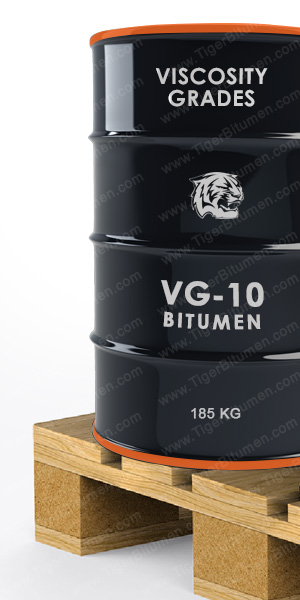
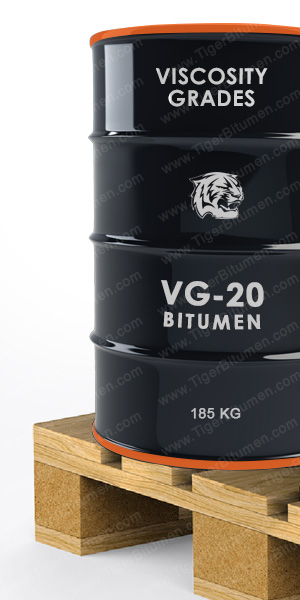
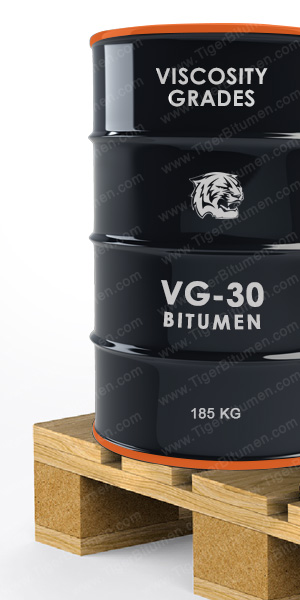
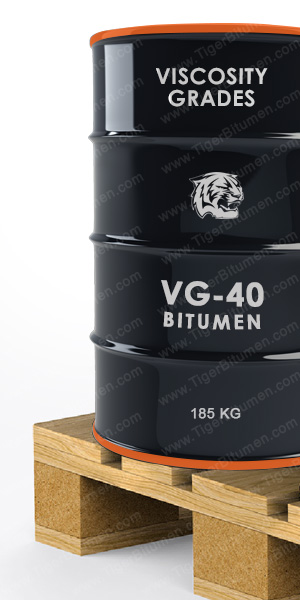
VG grading (VG-10 to VG-40) follows IS 73 and evaluates the binder using viscosity measurements at specified temperatures, together with other requirements such as penetration. It is widely used in India and other markets where the applicable specification adopts the VG classification system.
AC grading (AC-2.5 to AC-40) follows ASTM D3381 and related specifications such as AASHTO M226, with classification based primarily on the viscosity of the original binder at 60°C. The applicable standard should be checked for the complete set of requirements.
AR grading (AR-1000 to AR-16000) is associated with the aged-residue approach under AASHTO M226, with viscosity evaluated after laboratory aging procedures intended to simulate short-term binder aging during asphalt production. This provides information about binder properties after simulated aging and can be useful when the project specification requires an aged-residue viscosity classification.
In practical terms, the appropriate grading system depends on the project specification and applicable standard. VG should be selected where the specification references the relevant IS requirements, while AC or AR should be selected where the applicable ASTM/AASHTO-based specification calls for those classifications. We supply grades under all three systems, so buyers should confirm the required grading system before ordering.
Viscosity-graded bitumen is produced and processed under controlled conditions to achieve the viscosity and other properties required by the applicable grading standard. Depending on the production process and feedstock, refining and blending may be used to achieve the required binder characteristics. Maintaining consistent properties across a production batch requires appropriate process control and laboratory testing.
Each production batch is tested against the requirements of the applicable standard. Depending on the grading system, testing may include viscosity, penetration, softening point, ductility, flash point, and ageing-related properties. These tests help verify that the material meets the specified requirements for its VG, AC, or AR classification before shipment.
HY International has the capability to Export and Supply the Viscosity Grades Bitumen in compliance with National and International standards.
Viscosity Grade bitumen is classified to provide controlled binder properties at specified temperatures, helping engineers and contractors select a binder that matches the requirements of a particular asphalt mixture and pavement application. Depending on the grade, applicable standard, mix design, and project conditions, key benefits may include:
Selecting the appropriate grade and grading system according to the project specification, climate, traffic conditions, and pavement design helps contractors and consultants achieve the required pavement performance and service life.
Viscosity Grade bitumen is used across infrastructure projects where controlled binder properties are important during asphalt production, paving, and service conditions. Typical applications include:
Highways and motorways
Municipal and urban road construction
Airport runways and taxiways
Industrial roads and logistics facilities
Heavy-traffic road construction, including intersections and toll plazas
Surface dressing and spraying applications, particularly where softer VG or AC grades are specified
Hot mix asphalt production for base and wearing courses
Road rehabilitation and resurfacing projects
Buyers sourcing Viscosity Grade bitumen for infrastructure projects in Turkey typically require it where the project specification references a viscosity-based standard or where the applicable road authority specifies a viscosity grading system for the intended pavement application. The appropriate grade should be selected according to the project specification, climate, traffic conditions, and pavement design.
VG Grades
AC Grades
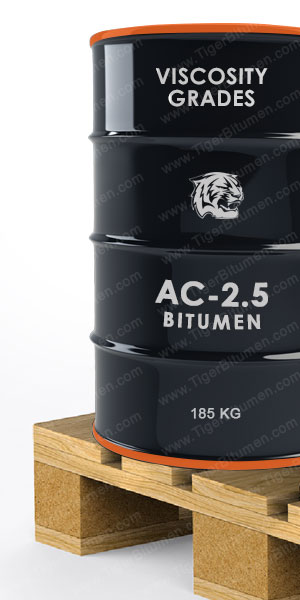
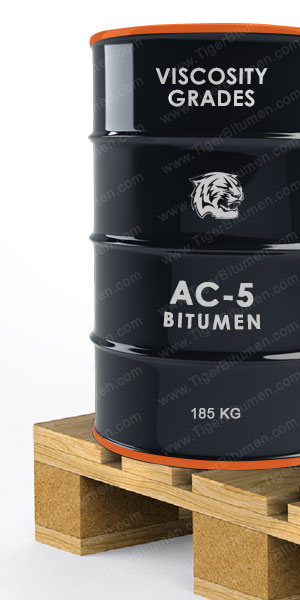
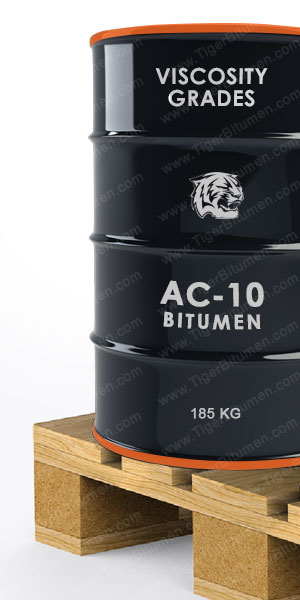
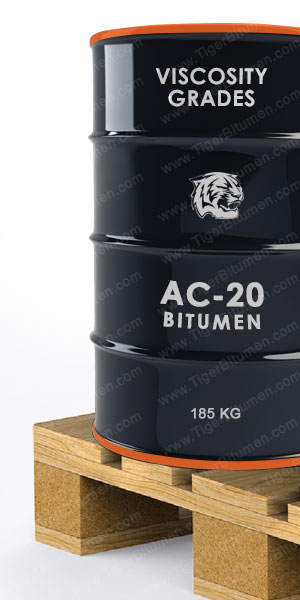
AC grades are numbered by original binder viscosity in hundreds of poises at 60°C AC-2.5 is the softest grade in the range, AC-40 the hardest.
AR Grades
AR grades are numbered by aged-residue viscosity in poises at 60°C, measured after RTFOT AR-1000 is the softest, AR-16000 the hardest.
Each grade page carries the specific technical properties and packaging options relevant to that grade. If your project specification calls for a grade not listed here, contact our export team directly we’ll confirm honestly whether it’s something we currently produce rather than list a grade we can’t reliably deliver.
Viscosity Grade bitumen is packed in new steel drums and loaded into containers for direct vessel shipment, providing a practical format for buyers to receive, store, and distribute the material. Steel drum packaging can be a suitable option for buyers who do not require bulk tanker delivery infrastructure at the destination port.
Every production batch is tested before dispatch against the properties relevant to its grading system, which may include viscosity, penetration, softening point, ductility, flash point, and ageing-related properties, where applicable. SGS inspection is available upon request. Buyers seeking independent third-party verification before loading can request an SGS inspection, appoint their own inspection agency, or arrange for a representative to attend the loading process.
Tiger Bitumen supplies Viscosity Grade bitumen on FOB, CFR, or CIF terms, depending on the buyer’s preferred commercial arrangement and destination port. Our export facilities at Karachi Free Zone and Ajman Port support containerized shipment, providing international buyers, including those coordinating supply for projects in Turkey, with a structured process from order confirmation through shipment.
Each export shipment can be accompanied by a standard documentation package, as applicable:
Certificate of Analysis (COA), confirming tested viscosity and other relevant grade properties
Safety Data Sheet (SDS)
Commercial Invoice and Packing List
Certificate of Origin, available on request
SGS Inspection Report, available on request
Buyers coordinating import procedures into Turkey or any other destination should confirm local documentation, customs, and import requirements in advance, as these may vary by destination, port, and product classification. Our export team can advise on the documentation we are able to provide to support the import process.
Tiger Bitumen supplies Viscosity Grade bitumen with a focus on product quality, testing, documentation, and export logistics. Key points include:
VG-10, VG-20, VG-30, and VG-40 under the IS:73 standard; AC-2.5 through AC-40 and AR-1000 through AR-16000 under the ASTM/AASHTO viscosity standards. Contact our export team to confirm current availability for your required grade and volume.
VG follows the Indian Standard IS:73, testing original binder viscosity at 60°C and 135°C. AC follows ASTM D3381/AASHTO M226 Method A, testing original binder viscosity at 60°C only. AR follows Method B, testing viscosity at 60°C after the binder has been aged via a Rolling Thin Film Oven Test generally considered more representative of actual in-service behavior.
Check your project or road authority specification directly it will reference either IS:73 (VG), or ASTM/AASHTO viscosity grading (AC or AR). If you're unsure, send us your specification and our team can help identify the correct grade.
Yes. We supply international buyers, including those sourcing viscosity graded bitumen for road construction and infrastructure work in Turkey. Send us your project's grade, quantity, and destination details and our export team will respond directly.
SGS inspection is available upon request rather than automatic on every shipment. Buyers who want independent verification before loading should request it when placing their order, and are also welcome to appoint their own inspection agency.
New steel drums, loaded into containers for direct vessel shipment.
A Certificate of Analysis, Material Safety Data Sheet, commercial invoice, and packing list are provided as standard, with a Certificate of Origin and SGS inspection report available on request.
Yes. We quote against whichever commercial term suits the buyer's logistics arrangement and destination port.
Minimum order quantities vary by grade, packaging, and destination contact our export team with your specific requirement for an accurate figure.
Send us your required grade (VG, AC, or AR), quantity, packaging preference, and destination port, and our export team will respond with technical documentation and a firm quotation.
If you’re sourcing viscosity-graded bitumen for a road or infrastructure project in Turkey or any other market tell us your required grade, quantity, and destination port. Our export team will respond with technical specifications, documentation details, and a firm FOB, CFR, or CIF quotation.
Visit: www.TigerBitumen.com